The Simple Path to Wealth
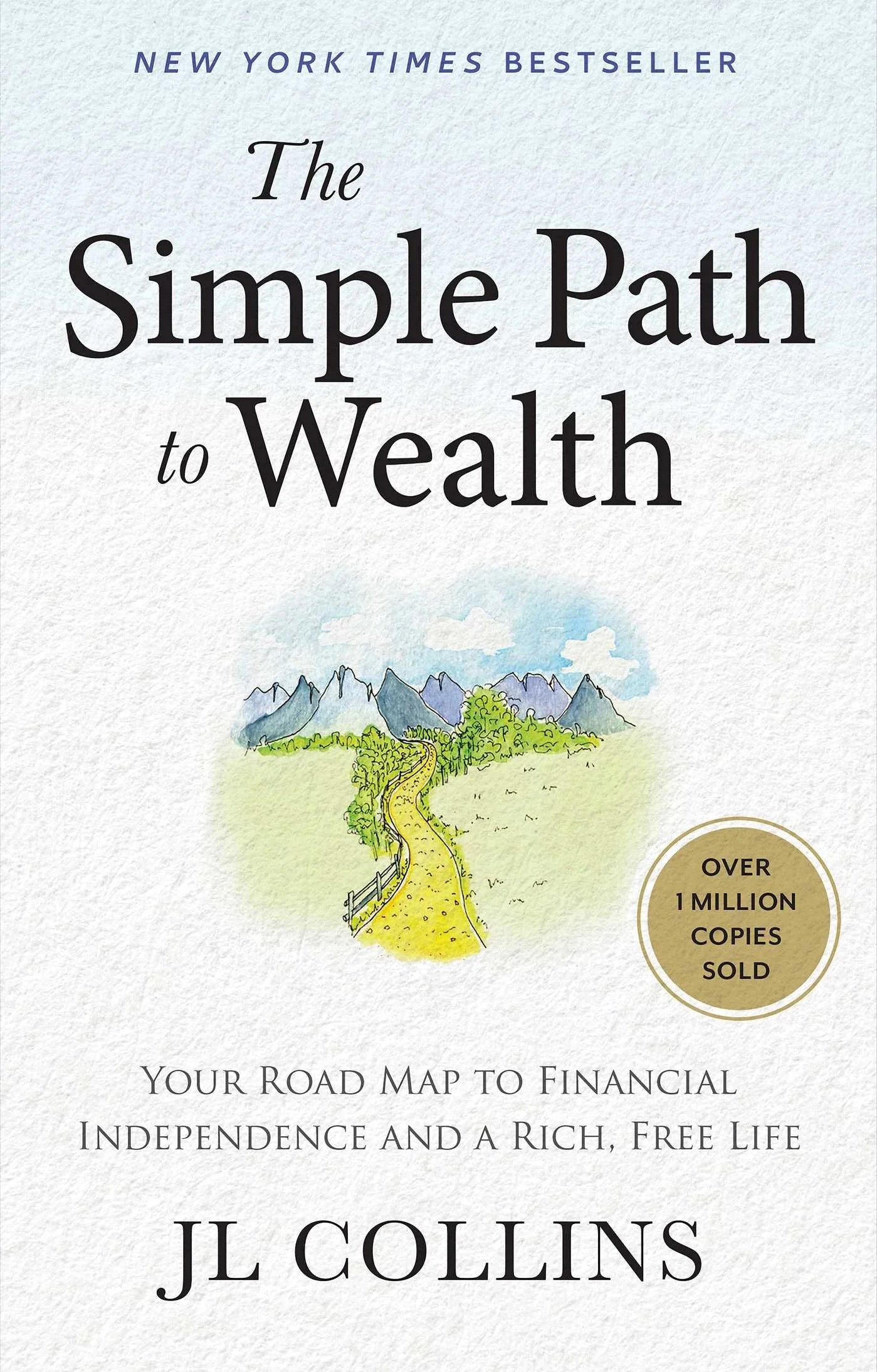
The book is for anyone who wishes to attain financial freedom, originally written as a guide to assist the author's own child in navigating early adulthood. The primary objective is to teach individuals how to escape the cycle of living paycheck to paycheck and instead build a robust financial foundation that allows for complete autonomy over one's time, career, and life choices.
The focus is on the pursuit of personal freedom rather than the mere accumulation of material possessions. Collins argues that true wealth is not about acquiring expensive indulgences, but rather about buying one's own liberty. He warns against the "tyranny of must-haves," a societal mindset which dictates that individuals must constantly purchase luxury cars, massive houses, private schooling, and other expensive status symbols. In fact, Collins explicitly states that houses are often expensive indulgences rather than true investments, and owning one is not always a financially sound decision. He critiques the modern approach to higher education, noting that spiralling debt has transformed the university experience from a pursuit of culture and learning into mere job training meant to secure employment to service loans.
By shifting one's mindset away from what money can buy and toward what money can earn, individuals begin to recognize the opportunity cost of their purchases. When money is spent on a depreciating asset like a car, the buyer loses not only the initial capital but also the decades of compounded interest that the money could have generated. Therefore, the ultimate reason for following this simple path is to build a life of flexibility, mental toughness, and security, allowing individuals to walk away from soul-crushing jobs or simply enjoy the work they do without any underlying financial anxiety.
The recommended strategy revolves heavily around the stock market, specifically through low-cost, broad-based index funds. Collins champions the stock market as the most powerful wealth-building tool in human history. Instead of trying to pick individual winning stocks-a task that even professional analysts, rock-star fund managers, and corporate executives consistently fail to do over the long term-investors should buy an index fund that captures the entire market. Specifically, Collins recommends funds like Vanguard's Total Stock Market Index Fund, which essentially allows investors to own a small piece of virtually every publicly traded company (over 6,000) in the United States. This approach harnesses the collective effort of millions of workers and executives who are all actively striving to increase corporate value, thereby making the investor wealthier. Even if certain sectors or massive technology companies dominate the index at a given time, index funds naturally "self-cleanse"; successful companies grow to represent a larger share of the portfolio, while failing companies naturally fade away. While the focus is heavily on the United States market due to its historical dominance, Collins notes that if the US were to lose its status as the world's reserve currency, an investor could simply shift their focus to a global fund to maintain their wealth.
The recommended strategy relies on radical simplicity, high savings rates, and an avoidance of professional investment advisors and speculative fads. He points to research demonstrating that an overwhelming 83% of actively managed equity funds fail to outperform unmanaged index benchmarks over a twenty-year period, yet they continually charge their clients exorbitant fees for this underperformance. Extending time horizon to 30 years, it was found that less than 1% of active managers actually outperform the market. To avoid losing wealth to these fees, individuals should put all their money into one large, diverse index fund and simply forget about it. Building wealth simply for ordinary folks is perhaps an endurance game.
When/how to enter the market, Collins advises against dollar cost averaging, which is the practice of trickling money into the market slowly to avoid sudden drops. Because the market historically rises eighty-two percent of the time, keeping money out of the market usually means paying higher prices later and missing out on significant gains. Speculative assets, such as cryptocurrency, should also be avoided because they do not generate underlying cash flows or growth; they rely purely on the hope that someone else will pay more for them later.
Once financial independence is achieved, the question of how to live off the amassed wealth is answered by the Trinity Study. This prominent financial study established the 4% rule, demonstrating that a portfolio composed of a mix of stocks and bonds can withstand a 4% annual withdrawal rate, adjusted for inflation, with a 96% success rate over a 30 year period. For greater safety, withdrawing 3% or less essentially guarantees portfolio survival, whereas straying up to 7% risks total financial ruin unless the investor remains highly flexible with their spending.
When to start investing, and when to sell assets. The best time to start is immediately. While starting young provides a significant mathematical advantage due to the incredible power of compounding interest, it is never too late to begin. Collins estimates that regardless of age, a dedicated individual following his principles can achieve financial independence within ten to fifteen years, depending largely on their savings rate.
The more challenging aspect of "when" relates to market timing. Collins is adamant that investors must never try to time the market, regardless of what famous economists or television gurus claim. The stock market is incredibly volatile, and an investor's portfolio will inevitably be cut in half at least once, if not multiple times, over a lifetime of investing. Market crashes, such as the major global collapse in 2008, are completely normal, expected events. During these terrifying periods, the financial media will urge the public to sell, but the only correct action is to ignore the panic and hold the investments. The market always recovers, and enduring this immense psychological pain is simply the necessary price of admission for long-term wealth. Over decades, despite numerous crashes, the upward trajectory of the market is virtually unstoppable, as bad stocks can only go down to zero, but good stocks have an infinite upside potential.
Ultimately, navigating personal finance does not require an advanced degree in economics, a subscription to complex financial newsletters, or the intervention of highly paid wealth advisors. It requires a fundamental shift in how one views money, prioritizing future freedom over present consumption. By avoiding the traps of unnecessary debt, rejecting the temptation to pick individual stocks or speculative assets, and consistently channeling savings into broad-based index funds, anyone can build adequate wealth. While the journey will undoubtedly test an investor's emotional resilience through inevitable market crashes, the simple path relies on the enduring, upward resilience of the broader economy. Every dollar saved and invested today is a tangible step toward profound personal autonomy.