The Psychology of Money
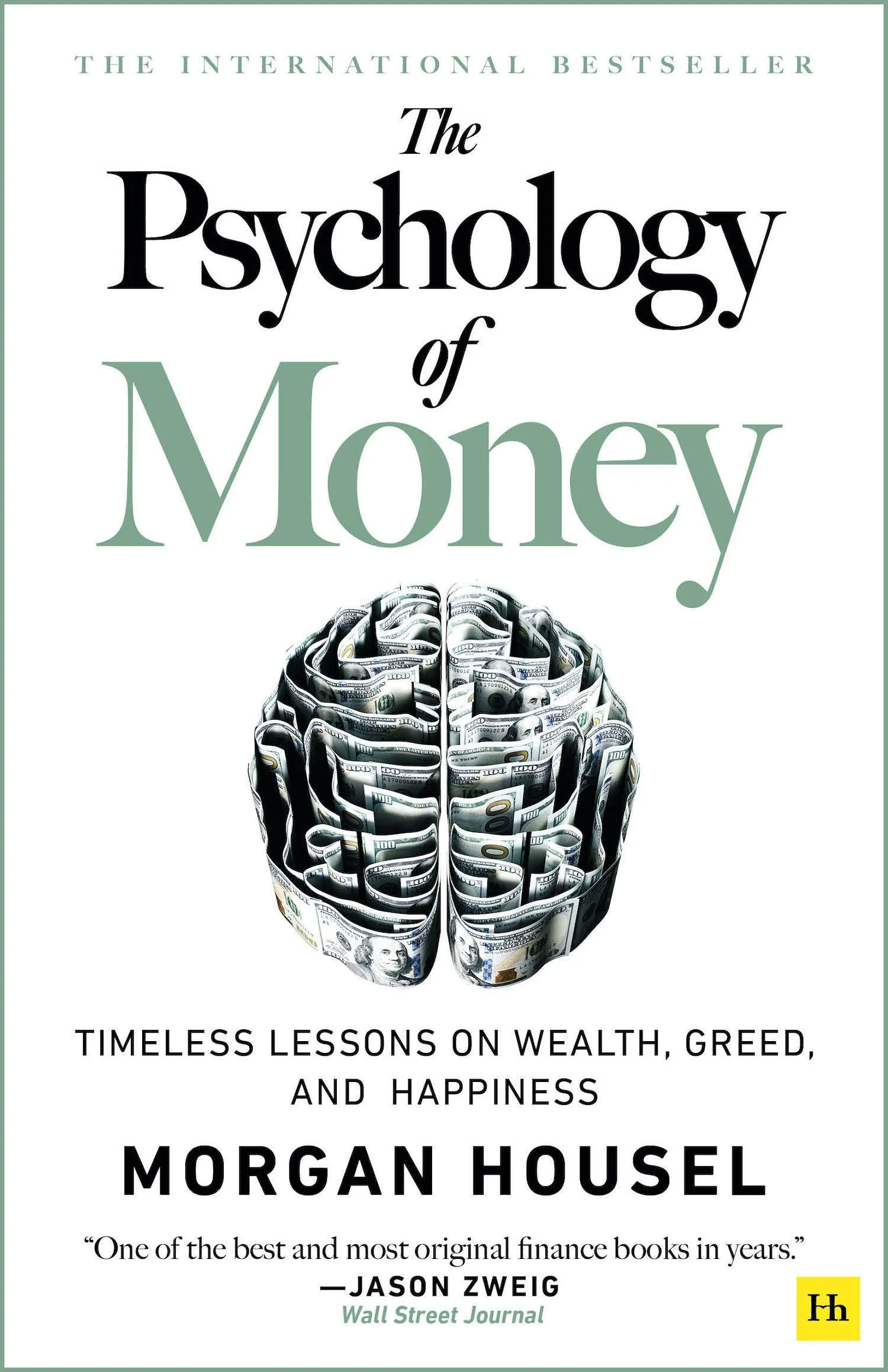
Based on the book, financial success is not a hard science, but rather a soft skill where how you behave is significantly more important than what you know.
Who typically succeeds in the realm of personal finance? It’s reasonable to assume that individuals with elite degrees or extensive formal training hold an advantage. However, finance is a remarkably unique industry where an individual with no college degree, background, or connections can massively outperform someone with the best education and training. We exist in a complex world, participating in a massive game alongside seven billion other people and infinite moving parts. Consequently, the twin forces of luck and risk play a profound role in dictating outcomes, often meaning that the accidental impact of actions entirely outside your control can be far more consequential than your conscious decisions. Therefore, rather than trying to copy the extreme, unrepeatable luck of statistical outliers, the everyday individuals who truly succeed are those who look for broad, applicable patterns of success, such as structuring their lives to take control of their time.
At its foundation, the book focuses on the realization that acquiring money and keeping money require diametrically opposed skill sets. Getting wealthy often requires taking significant risks, exuding relentless optimism, and putting yourself out there. Keeping wealth, by contrast, requires the exact opposite: it demands humility, frugality, and a healthy fear that what you have made can be taken away just as swiftly. Furthermore, what constitutes true wealth is not the accumulation of luxury items, but rather the highest dividend money pays: the ability to wake up every morning and say that you can do whatever you want today. True wealth is the priceless flexibility to do what you want, when you want, with whom you want, for as long as you want.
Why do so many otherwise intelligent individuals struggle to achieve financial stability? A primary culprit is the trap of social comparison. Modern capitalism is highly effective at generating both tremendous wealth and pervasive envy. Because the ceiling of social comparison is impossibly high, it is a psychological battle that simply cannot be won unless you consciously decide not to fight it at all. Driven by this comparative envy, individuals often make the foolish mistake of risking what they have and need for things they do not have and do not need. Understanding why this occurs allows you to cultivate a critical sense of "enough," recognizing that happiness is effectively just your results minus your expectations.
Where do these psychological battles play out? They occur in the volatile environment of the global economy and the stock market, an arena driven far more by human emotion-nervousness, greed, and paranoia-than by strict rationality. In this environment, things that have never happened before happen all the time. When participating in these markets, you must carefully choose where to place your psychological anchors. For instance, when the market inevitably drops, it is a natural human response to view the loss of wealth as a fine or a punishment for doing something wrong. However, the successful investor shifts their perspective to view loss not as a fine, but as the standard admission fee required to access returns greater than those offered by basic cash savings.
The mathematical magic of compounding works best when you can give a plan years or decades to grow and endure. Consider a historical simulation spanning century: an investor who steadily saved and invested one dollar every single month-rain or shine, entirely ignoring looming recessions-ended up with vastly more wealth than investors who attempted to time the market by pulling their money out during economic downturns. Consistency over time is paramount. Yet, you must also be mindful of when you are making life choices, recognizing that you are making them for a future self whose desires will inevitably change. The odds that you will still enjoy a career you chose when you were barely old enough to drink are quite low by the time you reach retirement age. Therefore, when planning for the future, you must abandon sunk costs-anchoring decisions to past efforts that cannot be refunded-so that your future self does not remain a prisoner to your past decisions.
How do we implement these principles into our daily life? The most actionable step is to focus heavily on your savings rate, which relies entirely on your personal psychology and frugality rather than unpredictable investment returns. Learning to be happy with less money creates a powerful gap between what you have and what you want. You can spend less if you desire less, and you will fundamentally desire less if you deliberately increase your humility and care less about what others think of you. Furthermore, you must build a margin of safety, or room for error, into every financial plan, acknowledging that the most important part of every plan is actively planning on the plan not going according to plan. In doing so, remember that a gap often exists between what you can technically endure on a spreadsheet and what is emotionally possible for you to survive. Saving money without a specific spending goal provides you with unseen, incalculable returns: the flexibility to wait, the opportunity to pounce, and the time to change course on your own terms. Ultimately, the best universal guidepost for how you should manage your money is simply whether your financial choices help you sleep soundly at night.
We should view wealth not as a collection of status symbols, but as the bedrock of personal autonomy. Be nicer and less flashy, remembering that no one is as impressed with our possessions as we are, and that the respect we truly desire is earned through kindness and humility. Independence, at any income level, is highly achievable and is driven entirely by our savings rate and our ability to keep our lifestyle expectations in check.